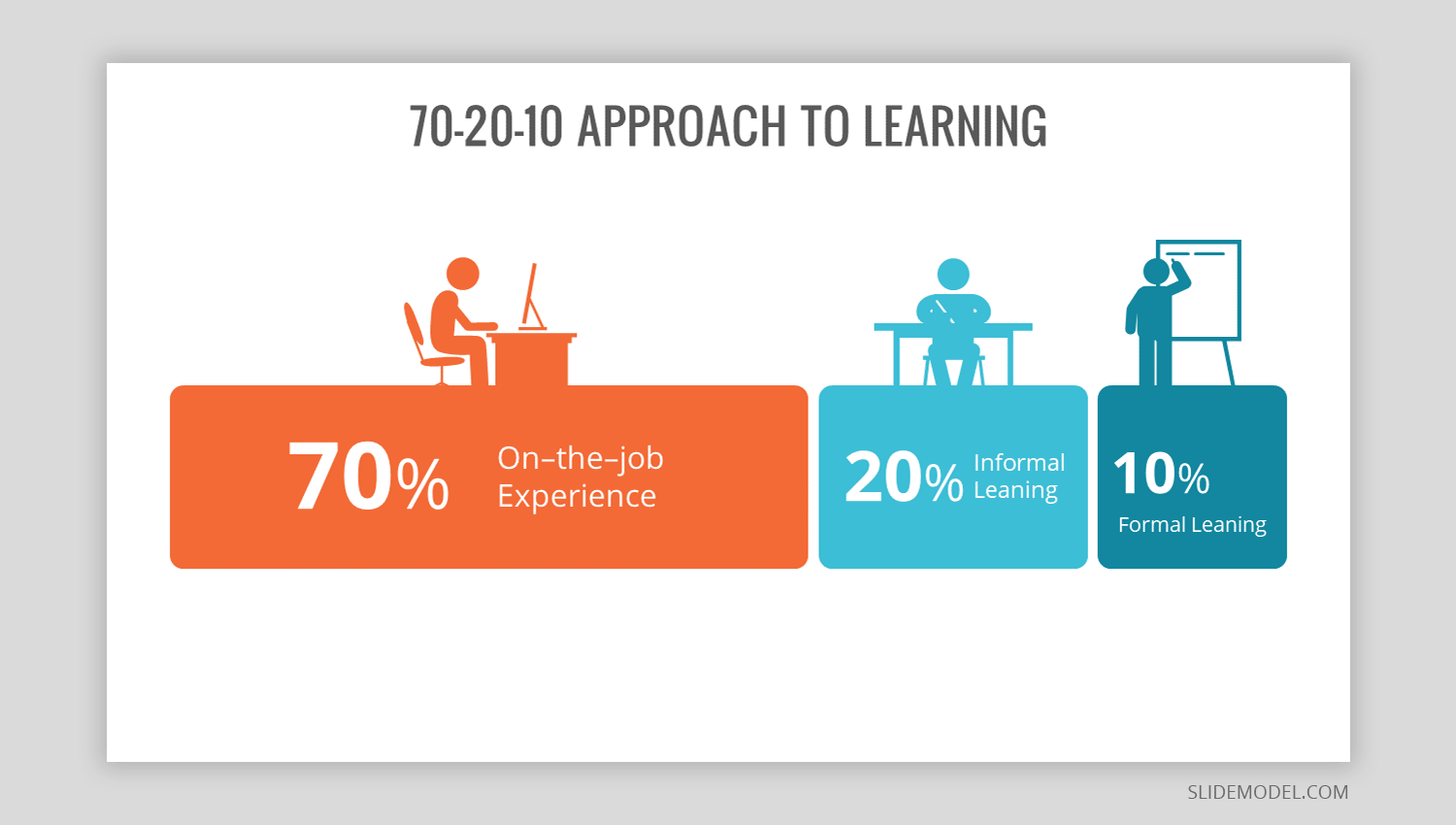
The 70-20-10 Model for Learning and Development is a technique to label the optimal sources of learning by the productive working environment and following the successful people around the work environment.
The 70-20-10 Model stands for:
- 70% of their knowledge from job-related experiences,
- 20% from interactions with others, like coworkers and managers,
- 10% from formal learning events.
It holds that individuals obtain 70 percent of their knowledge from job-related experiences, 20 percent from interactions with others, and 10 percent from formal educational events. Michael Lombardo and Robert Eichinger expressed their rationale behind the 70:20:10 model.

70% Of Learning Is Experiential
This phase is usually considered Experiential learning, which revolves around the daily task and regular practices. This learning style is informal and bent more towards the employee grasping skills and willingness to learn. It’s a great opportunity for employees to get a time frame to observe and try on live projects or shadowing someone more experienced. It also encourages employees to see the challenges & learn from their mistakes and get on job performance feedback to do better or improvise.
So self-learning and on-job practical training is always a better option for employees to learn faster and in-depth. This will also directly link to the retention strategy wherein new joiners have experienced the process and associating strong team-building connection in first hand.
This phase is of self-sufficiency where the employee has the free environment to learn & grow and in the process, they’re more well-informed and primed for future challenges.
20% of Learning is Social
Social Learning is the concept where the employee learns through social interaction or peer-to-peer knowledge at the workplace. This kind of arrangement generally happens at the same level group while working on the same project. This kind of arrangement is usually designed as mentoring & coaching programs in the organization. Like if somebody experienced employee joins a new team, instead of organizing the classroom training that person will get more good insights and techniques if the opportunity is given to work with peers on the on-going projects with the same mission. The employee will learn through observing and interacting with peer colleagues.
More importantly, the effectiveness of the learning through the social channel is all dependent on the organization’s culture. If you have an organizational learning mindset then it’s very easy to coach the new hires and encourage a productive work environment with & strong culture of compassion & empathy.
10% Of Learning Is Formal
This is the most well-known training style known, training delivered in a structured way, where first we teach, then assessments and finally, then deploy on the project. This phase has its benefits like the employee is well trained and ready to take the charge also it clear the base knowledge of the job.
Explore more about your organization strategy and get started with this model by identifying how it can help your organization to achieve your employee development goals.
 Eashablogs