Do you ever experience a strong desire for something in your life, yet at the same time, you harbour a fear that you may never attain it? This apprehension might stem from the fact that you know what you want but lack the knowledge of how to achieve it. This is where the process of setting goals becomes crucial.
The initial step should always involve determining what you wish to accomplish through your actions. Is it truly worth investing your time and effort into this goal? Do you genuinely desire it? Once you find satisfactory answers to these questions, you are prepared to establish SMART Goals.
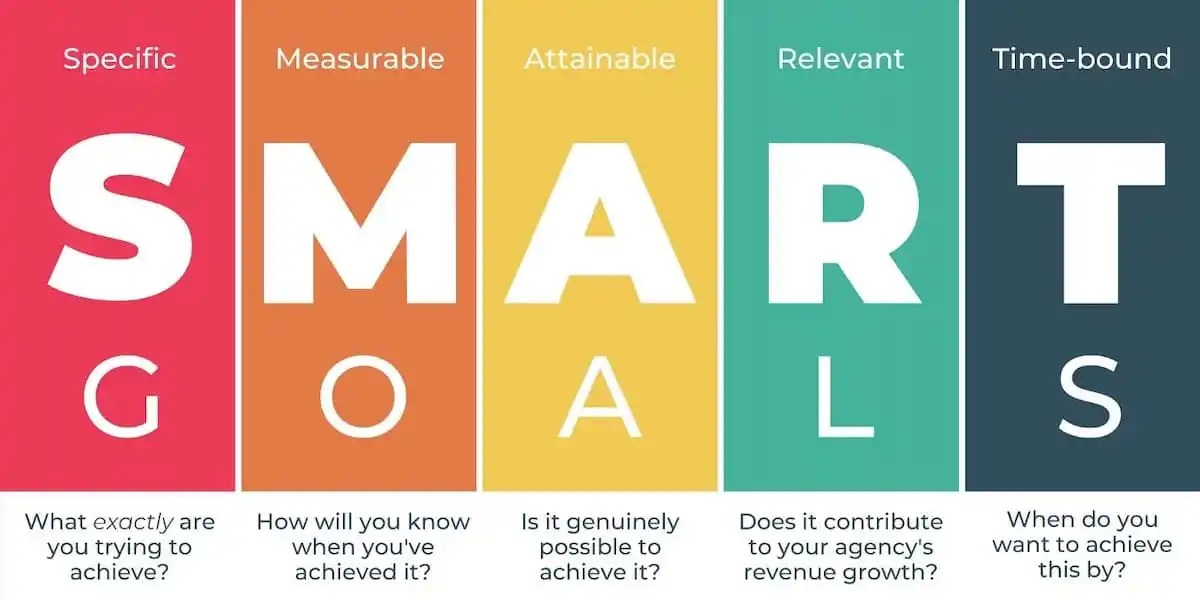
Create SMART GOALS – By setting goals, we get a target to aim for but a SMART goal is used to help guide goal setting. SMART is an acronym that stands for Specific, Measurable, Attainable, Realistic, and Timely. Therefore, a SMART goal incorporates all of these criteria to help focus our efforts and increase the chances of achieving the goal.
- Specific – Well-defined, clear, and unambiguous
- Measurable – With specific criteria that measure your progress toward the accomplishment of the goal
- Attainable – Achievable and not impossible to achieve.
- Realistic – Within reach, realistic, and relevant to your business/life purpose.
- Timely – With a clearly defined timeline, including a starting date and a target date. The purpose is to create urgency.
Specific SMART Goals
Goals that are specific have a significantly greater chance of being accomplished. The “five W” questions refer to a set of interrogative words that are commonly used to gather information and provide a comprehensive understanding of a situation. The five W’s are;
- Who: Refers to the individuals or entities involved in a situation or event. It helps identify the people or groups responsible or affected by the goal.
- What: Focuses on the specific actions, outcomes, or objectives that need to be accomplished. It helps define the nature and scope of the goal.
- Where: Indicates the location or context in which the goal will take place. It helps determine the setting or environment in which the goal will be pursued.
- When: Specifies the timeframe or deadline associated with the goal. It establishes a time limit for achieving the desired outcome.
- Why: Explores the reasons, motivations, or justifications behind the goal. It helps clarify the purpose and significance of pursuing the goal.
The SMART goals technique can be beneficial in setting Key Result Areas (KRAs) by providing a structured approach to defining and aligning your objectives. By applying the SMART goals technique to your KRAs, you ensure that your objectives are specific, measurable, attainable, relevant, and timely. This approach enables clarity, focus, and alignment, increasing your chances of success in fulfilling your key responsibilities and achieving your desired outcomes.
 Eashablogs