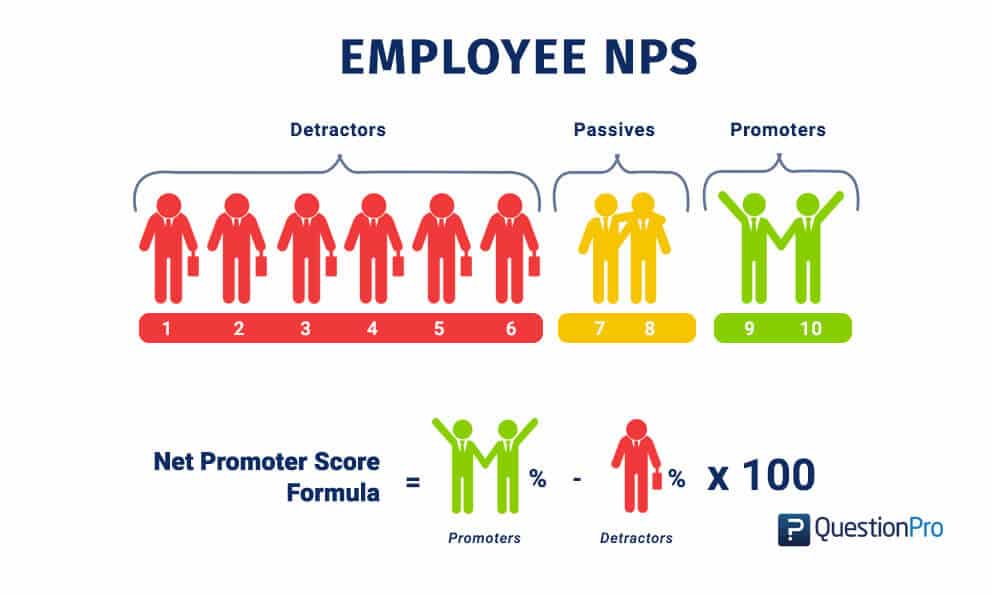
The eNPS (Employee Net Promoter Score) is a metric used to measure the loyalty and satisfaction of employees within an organization. It is derived from the Net Promoter Score (NPS) framework, which is commonly used to measure customer loyalty. The eNPS specifically focuses on employees as the subjects of the survey.
The eNPS score is important for several reasons:
- Employee Engagement
- Retention and Turnover
- Employer Branding
- Customer Satisfaction
- Continuous Improvement
- Regular Employee Feedback
To calculate the eNPS score, you need to categorize respondents into three groups based on their ratings:
- Promoters: These are employees who respond with a rating of 9 or 10. They are considered highly satisfied and loyal employees who are likely to recommend the company to others.
- Passives: These are employees who respond with a rating of 7 or 8. They are generally satisfied with the company but may not be actively promoting it.
- Detractors: These are employees who respond with a rating of 0 to 6. They are not satisfied or loyal and may even share negative experiences or opinions about the company.
To calculate the eNPS score, follow these steps:
- Calculate the percentage of Promoters by dividing the number of Promoters by the total number of respondents and multiplying by 100.
- Calculate the percentage of Detractors by dividing the number of Detractors by the total number of respondents and multiplying by 100.
- Subtract the percentage of Detractors from the percentage of Promoters to get the eNPS score.
The eNPS score can range from -100 to +100. A positive score indicates that there are more Promoters than Detractors, suggesting a higher level of employee satisfaction and loyalty. On the other hand, a negative score indicates that there are more Detractors than Promoters, indicating areas of concern and potential issues within the organization. It’s important to note that eNPS is just one measure of employee satisfaction and should be used in conjunction with other surveys, feedback, and metrics to gain a comprehensive understanding of the employee experience within an organization.
To improve the eNPS (Employee Net Promoter Score) with current employees, HR can implement the following strategies:
- Conduct Employee Surveys: Regularly administer anonymous surveys to gather feedback on employee satisfaction, engagement, and areas for improvement. Analyze the survey results and identify the main drivers of dissatisfaction or low eNPS scores. Use this feedback to develop targeted interventions.
- Enhance Communication Channels: Improve communication within the organization by implementing transparent and open channels. Encourage regular feedback and suggestions from employees. Use tools like intranets, employee forums, HR Floor Walks or suggestion boxes to ensure that employees have a voice and feel heard.
- Strengthen Leadership and Management Skills: Invest in leadership development programs to enhance the skills of managers and supervisors. Provide training on effective communication, coaching, and employee engagement. Strong leadership can significantly impact employee satisfaction and loyalty.
- Positive Work Environment: Promote a positive and inclusive work environment where employees feel valued, respected, and supported. Encourage teamwork, collaboration, and recognition of achievements. Foster a culture of trust and fairness throughout the organization.
- Employee Development and Growth Opportunities: Provide opportunities for professional growth and development. Implement training programs, mentorship initiatives, and career progression plans. When employees see a clear path for growth within the organization, they are more likely to be engaged and satisfied.
- Recognize and Reward Employee Performance: Implement recognition and rewards programs to acknowledge and appreciate employee efforts and achievements. Recognize outstanding performance through public recognition, rewards, or incentives. This helps boost morale and employee satisfaction.
- Work-Life Balance Initiatives: Promote work-life balance by offering flexible work arrangements, such as remote work options, flexible scheduling, or compressed workweeks. Encourage employees to prioritize their well-being and provide resources for stress management and work-life integration.
- Address Employee Concerns and Issues: Actively address employee concerns and issues promptly and fairly. Ensure that there are clear channels for reporting grievances and that appropriate actions are taken to resolve them. Regularly communicate updates and progress on addressing concerns.
- Improve Employee Benefits: Continuously review and enhance employee benefits packages to align with employee needs and industry standards. Ensure that the benefits offered are competitive and meet the diverse needs of the workforce.
- Regularly Measure and Monitor Progress: Continuously track and measure eNPS scores and employee satisfaction levels. Monitor the impact of implemented strategies and interventions. Adjust the approach as needed based on the feedback received.
Always Remember, improving eNPS scores takes time and consistent effort. By implementing these strategies, the HR team can create a more engaged and satisfied workforce, leading to a positive impact on the organization’s overall performance and employee retention.
 Eashablogs