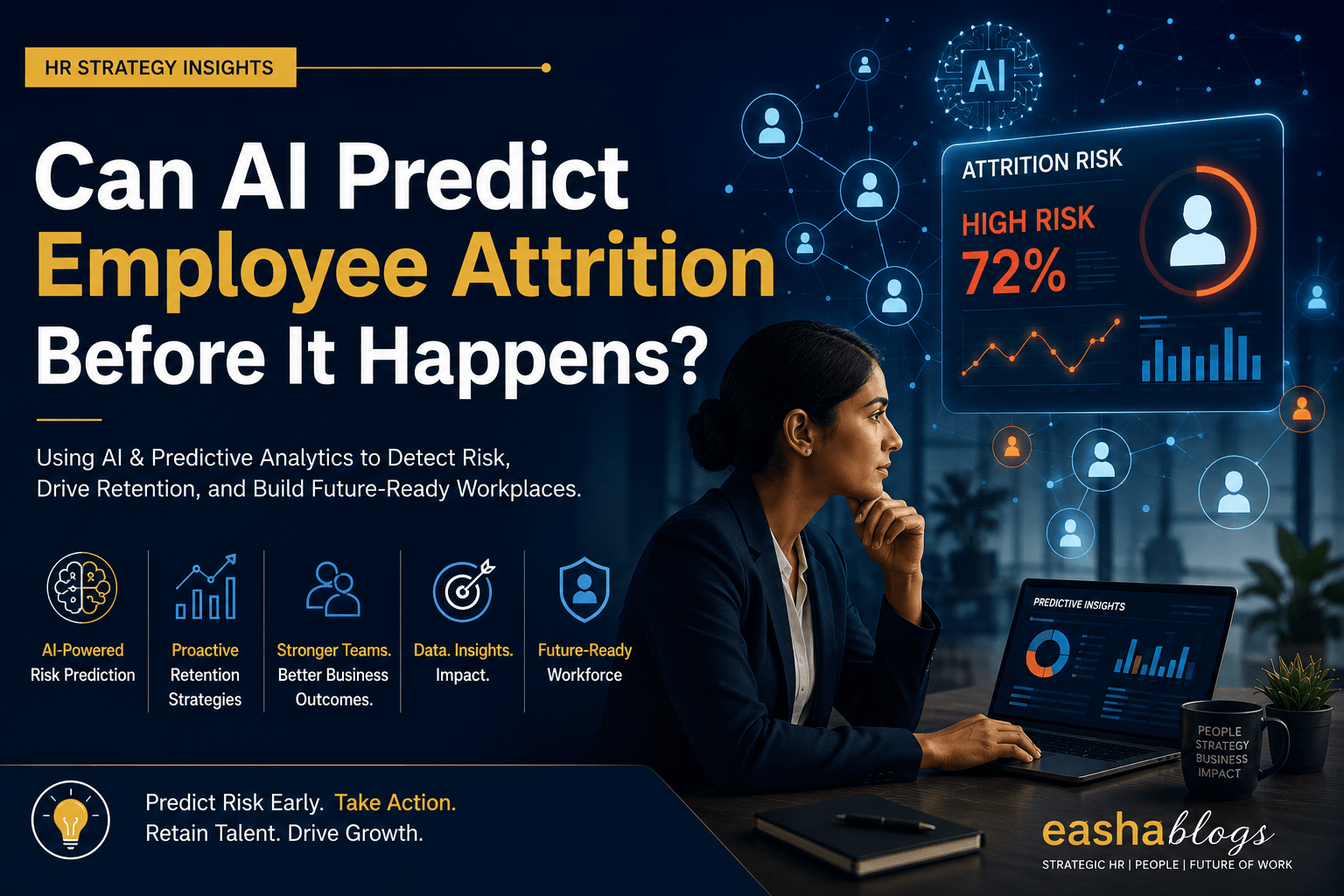
Employee attrition has evolved from being an HR metric to becoming a critical business risk. Organizations today are not only losing employees, but they are also losing institutional knowledge, leadership continuity, productivity, customer relationships, and future growth potential.
For years, attrition management remained reactive. Employees resigned, exit interviews were conducted, and organizations attempted to understand the reasons after the damage had already occurred. But in the era of workforce intelligence and predictive analytics, HR leaders are beginning to ask a far more strategic question:
Can AI predict employee attrition before it happens? The answer is YES!
Artificial Intelligence is transforming workforce planning by helping organizations identify early warning signals, predict attrition risks, and proactively improve employee retention strategies. However, the real opportunity is not simply predicting exits, it is building healthier, more engaging, and future-ready workplaces through intelligent workforce insights.
Why Attrition Has Become a Strategic Business Challenge
Employee attrition is no longer limited to operational inconvenience. In today’s rapidly evolving workplace, high turnover directly impacts:
- Business continuity
- Leadership pipelines
- Team productivity
- Customer experience
- Workforce morale
- Hiring costs
- Organizational culture
The challenge becomes even more complex in industries experiencing:
- Skill shortages
- Leadership gaps
- Digital transformation
- Hybrid work environments
- Changing employee expectations
Organizations are now realizing that retention cannot depend solely on compensation adjustments or reactive engagement initiatives. Modern retention strategies require predictive workforce intelligence.
The Shift from Reactive HR to Predictive Workforce Intelligence
Traditional attrition management relied heavily on:
- Exit interviews
- Annual engagement surveys
- Manager feedback
- Historical turnover reports
While useful, these methods often identified problems too late. AI is changing this approach by enabling organizations to analyze workforce patterns continuously and identify employees who may be at risk of leaving before resignation actually occurs.
This marks a significant shift: From reporting attrition – Predicting attrition risk.
How AI Predicts Employee Attrition
AI systems analyze large volumes of workforce data to identify behavioral, engagement, and performance patterns associated with employee exits. Rather than relying on one factor, predictive models evaluate multiple indicators together. Some common data signals include:
- Decline in employee engagement
- Reduced collaboration patterns
- Increased absenteeism
- Stagnant career growth
- Lack of internal mobility
- Reduced learning activity
- Compensation disparities
- Performance fluctuations
- Managerial changes
- Workload imbalance
- Employee sentiment trends
AI identifies hidden relationships between these patterns and historical attrition behavior, helping organizations detect risks earlier. For example: An employee may still be performing well but simultaneously show:
- declining participation,
- reduced learning engagement,
- minimal internal movement,
- and increased disengagement indicators.
Individually, these may seem insignificant. Together, AI can identify them as potential attrition risk signals.
Predictive Attrition is Not About Surveillance
One of the biggest misconceptions around AI in HR is that it creates employee monitoring systems.
Strategic HR leaders must approach predictive analytics responsibly.
The goal is not employee surveillance.
The goal is workforce wellbeing, retention intelligence, and proactive support.
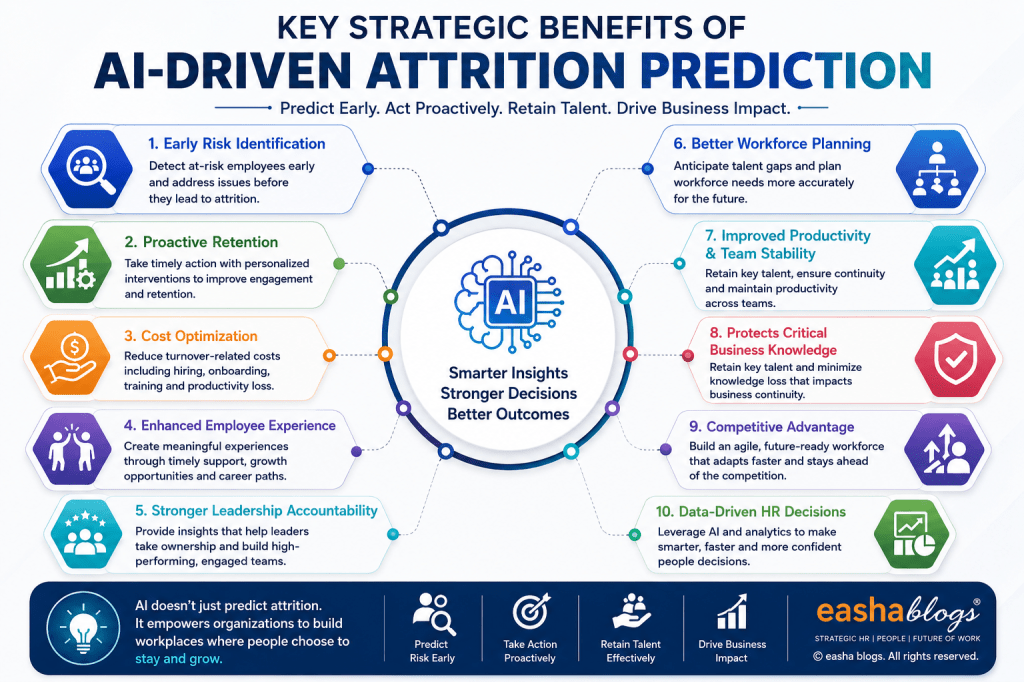
When implemented ethically, predictive analytics helps organizations:
- improve employee experience,
- identify organizational gaps,
- strengthen leadership support,
- and create better career growth opportunities.
The most successful organizations use AI to improve workplace quality not to control employees.
Human Judgment Still Matters – AI can identify patterns, but it cannot fully understand human context.
An employee flagged as “high risk” may simply be:
- preparing for maternity leave,
- facing personal challenges,
- exploring internal career shifts,
- or managing temporary burnout.
This is where strategic HR leadership becomes essential. AI should support HR decisions, not replace empathy, conversation, or human understanding. The future of HR is not automation alone, it is intelligent decision-making combined with human insight.
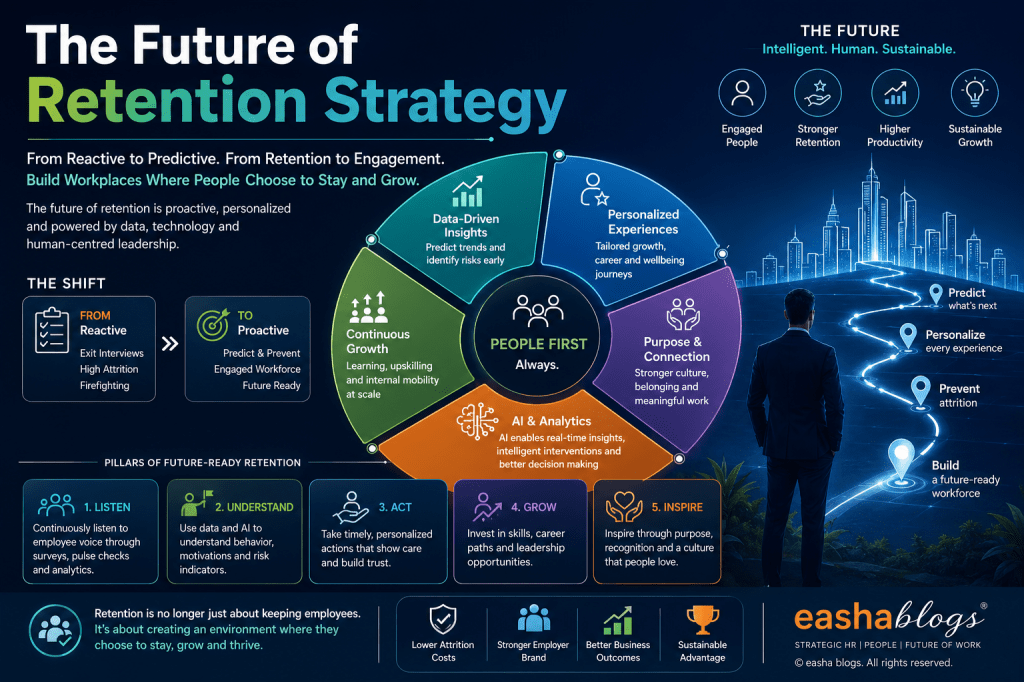
AI is transforming attrition management from a reactive HR process into a strategic workforce intelligence capability.
Yes, AI can increasingly predict employee attrition before it happens. But the bigger opportunity is not prediction alone, it is prevention through better leadership, stronger employee experiences, and smarter workforce strategies.
The organizations that will lead the future of work are not those using AI simply to track employees. They are the ones using intelligence to build more human-centered workplaces. In the end, retention is not just about keeping employees.
It is about creating environments where people choose to stay, grow, and contribute.

